For the first two years of my soap making journey (2017-2018) I did not get any DOS (dreaded orange spots). I had read about them, and I had seen other people’s experiences with it, and I thought myself special that I didn’t have any. Until one day, I started to notice that a soap of mine was turning yellow. It was not an orange spot though. It just seemed to be turning yellow, dark yellow. So I decided to research the cause and have listed some of my findings below.
Too Old- Oils
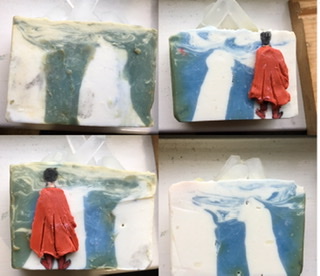
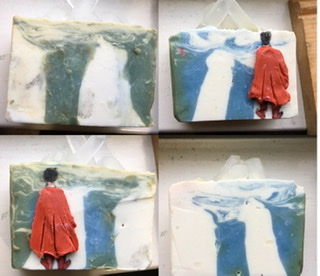
The yellowing happened to be in the blue portion of a soap, the superman soap. I thought the blue ultramarine pigment was to blame, until digging deeper I realized I had used grape seed oil, which has a shorter shelf life (6 months). When a soap goes rancid because of the oils in it, it is not only the color that changes, its smell changes as well. I normally toss away any soaps that have developed DOS, because I cannot move past that particular smell.
I also had proper DOS in this soap. I don’t think I took a picture of it, but there were distinct small orange spots in it, and I remembered that I also used the grapeseed oil in it.
But then, I also got some DOS in some soaps did not have any grapeseed oil. I started suspecting the rice bran oil, that I had bought on sale, perhaps its time had come. But then when I also got it in soaps that did not have rice bran oil, I started looking suspiciously at lard. I was in detective mode!
Overall, it seemed the rancidity of the oils was the culprit. I started adding rosemary oleoresin to the oils, to prevent rancidity, when doing my oils masterbatch. ROE (Rosemary oleoresin is used in very small amounts, 0.05%, a jewelry scale is usually needed to weigh it). Here is a page with more information on it.

Another additive I have chosen to use to prevent DOS is EDTA (and also to reduce soap scum, as it is a chelator). EDTA is used at 0.50% of the oils weight. You should know it is controversial to use it due to environmental concerns; however, the more eco friendly choice (GLDA) is usually not available in small amounts for the home soapmaker. You can read more about Tetrasodium EDTA here.
The most obvious and best way to prevent DOS is to use fresh oils. However, it is hard to know how fresh the oils are from a supplier. I used to buy beef tallow in bulk from Soapers choice. I thought its shelf life was long (a year or two, mistakenly). I found out of my error one day as I was getting ready to use it, I noticed it did not smell the same, it smelled rancid. I checked the manufacturer’s website and their recommendation was to use within 9 months. (Of course, it does not help that I kept it in the kitchen, that gets some sunlight; instead of in a dark or refrigerated area as it is suggested for oil storage). So, my new motto is to only use fresh or newly bought oils. It is a pain in the neck, but I bear with it. It means that if I want to make soap, I need to place orders for smaller amounts of beef tallow or shea butter ahead of time. And I need to source locally the oils that I buy locally, like olive oil or coconut oil. I also learned from some tips demo Soapers choice on how to keep shipping costs low.
Too Much Water
I participated in the ghost swirl challenge from the Soap Challenge Club in October of 2020, and that opened my eyes to another element that can bring about rancidity: too much water.
I had seen humidity being listed as a factor for DOS in soap making groups, and while I live in a very humid city, I had not thought about humidity being water in the air, so it follows that too much water within the soap could also be to blame.
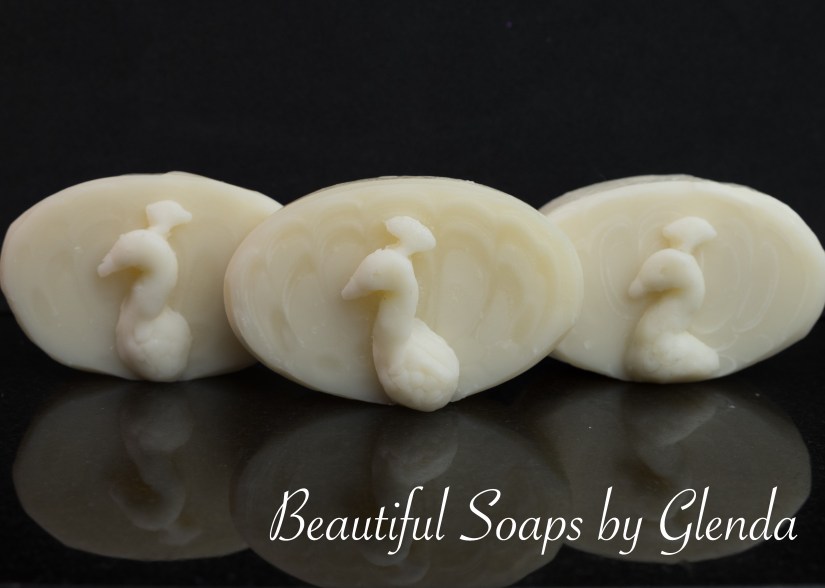
In the ghost swirl technique, one part of the soap has a higher water concentration and another part has the opposite, low water concentration. My peacock soap developed DOS faster than any other soaps I had experienced with. The areas with excess water turned orange/yellow and had that peculiar smell of rancid soap. I asked within the group if anybody had seen or noticed this, the only person who had experienced it was the host, Amy, because she had not used her usual red palm oil. Given that my oils were the same as those of any other soaps made within that timeframe, and that only this soap had DOS, I believe that the water, the extra water, was at fault. However, I should also note that this peacock ghost swirl soap did not have any ROE or EDTA, as additives were against the rules of the challenge. And I’m sure that also played a role.
Too much Metal
One last source for DOS has been the tools I use in soap making, namely those made of metal. This is primarily noticeable in soap dough or embeds for me. If I use an extruder tool, I avoid those that have aluminum barrels, and use a stainless steel one instead. When making frosted soaps with a piping tip, If I am not sure if a piping tip is made with stainless steel, I prefer not to use and opt for a 3d printed one instead.
The same goes for spatulas, containers and even the curing surface of your soaps, avoid your soap touching metal other than stainless steel.
Too Much Sun
I have also learned, when I cured my soaps close to a window (though not directly within sunlight), that sun exposure will cause yellowing and also cause a fragrance to fade. The best thing to do is to cure and store soaps in a cool shaded environment.
In closing, to avoid rancidity (yellowing) in soap:
- Source fresh oils for soap making
- Use an antioxidant (such as ROE at 0.05% of oils and/or EDTA at 0.50% of oil weight)
- Do a water discount (Most lye calculators give you a water calculation based on the hot process method, if doing cold process, even a small discount will help).
- Avoid metals other than stainless steel when making or storing soap.
What if Oils are Rancid, can you make soap with it?
I have tried making soap with rancid oils a couple of times, just to experiment. My plan was to have a 0% superfat so that all the oils would saponify (become soap). Another time I used them to test a column mold.
Here is what you can expect:
First of all, the batter accelerated like crazy (which is normal for rancid oils)
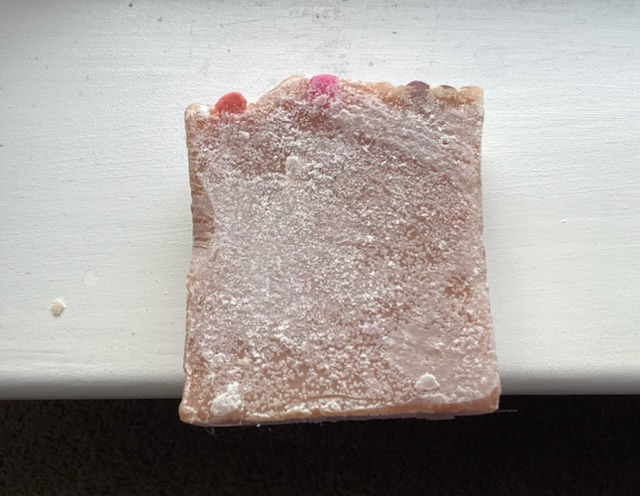
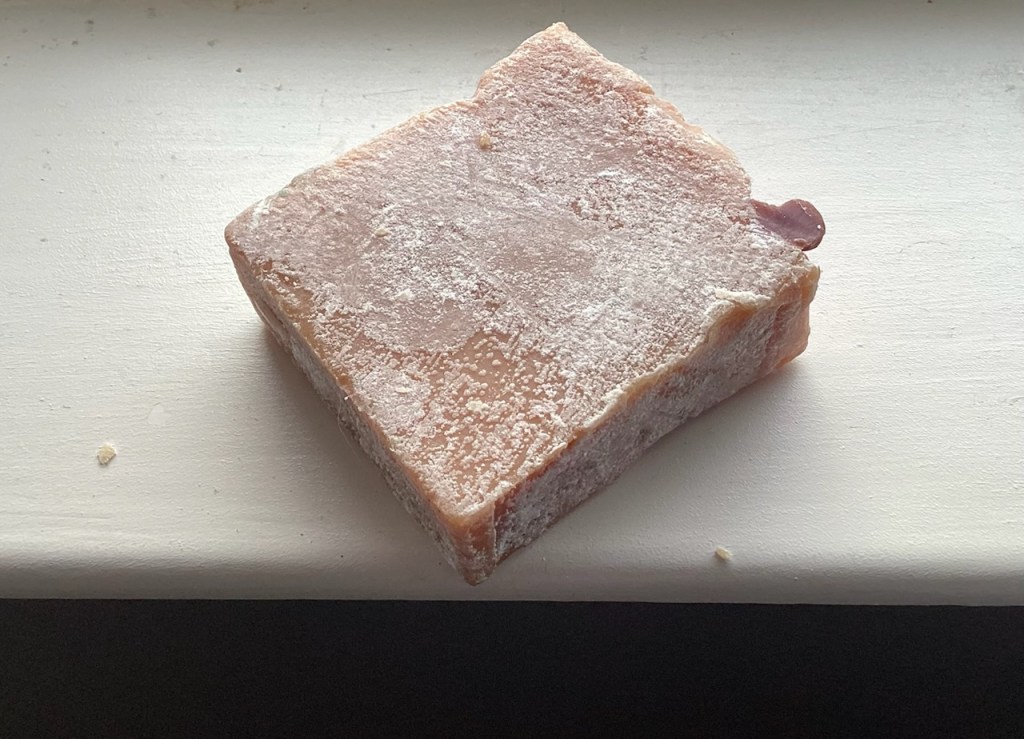
Secondly, the final bars developed a lot of stearic spots (or some white film in small dots), I did not dare use them so I tossed them away, just kept this one:

 Soaps by Glenda