

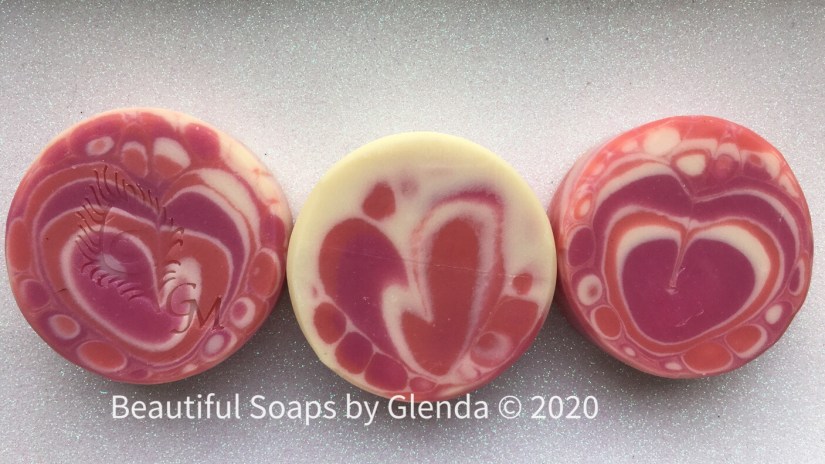
Last year, I had to take a crash course on making soap with a PVC pipe as a mold. I confess that I never liked the idea of a round soap, so I had not bothered to learn. However, I have learned they make great hand soaps, in an ergonomic kind of way. In the shower, they seem to be easy to drop and they roll around, but perhaps that is because our built in soap dish is kind of small.
What worried me especially was removing the soap from the PVC pipe, how is it supposed to happen? I was afraid of having to dig the soap out. It turns out that was relatively easy.
Here is a what I have learned about making soaps in a PVC pipe:
- You can customize the length of the mold and it is inexpensive- yay!
- Cutting the PVC pipe can be tricky if you do not have a miter saw or other kind of electric saw
- If you cut it by hand with a saw, you need to make sure to keep it as straight as possible, otherwise your mold can look like the leaning tower of Pisa.
- Sanding the ends of the pvc pipe will help you avoid scratches
- Putting Vaseline inside helps with removal
- Sealing the bottom can be tricky. I have used a round piece of hard plastic at the bottom to give some firmness to that end, then I have used a plastic sheet that is either taped or secured with rubber bands. The closer you get these to the edge, the better the closure it will be.
- It is best if you force gel on the soap for easy removal, but it is tricky to do that because it is a vertical mold. I put mine inside a box, the box is on top of a heating pad, I cover the box with blankets and turn the heating pad on high for a couple of hours.
- It is best to wait a couple of days to attempt removal.
- If your recipe has 40% or a higher percentage of fluid oils, removal could be more difficult as those tend to stay softer. Sodium lactate is recommended if so.
- When I am ready to remove the soao, I put the pvc pipe in the freezer for 1 hour.
- Then I take it out and wait 10 minutes.
- I remove the plastic sheets and start pushing the soap out, using a smaller cylindrical object makes it easier.
Recipe Oils, Fats and Waxes
| Oil | % | Ounces | Grams |
|---|---|---|---|
| Olive Oil | 30 | 4.5 | 127.57 |
| Tallow Beef | 30 | 4.5 | 127.57 |
| Coconut Oil, 76 deg | 25 | 3.75 | 106.31 |
| Castor Oil | 8 | 1.2 | 34.02 |
| Shea Butter | 7 | 1.05 | 29.77 |
| Total | 100 | 15 | 425.24 |
Recipe Totals
Note: I am using a lye blend that includes Koh (Potassium hydroxide), mainly because I bought some for a project, did the project, now I have a lot leftover and want to use it up. Also because I have read that it helps increase bubbles, and my husband loves a bubbly soap. You can run use the link above to copy and modify the recipe, and get the amounts for just Naoh.
| Liquid Required | 4.41 oz | 125.1 g |
| NaOH Weight | 2.01 oz | 56.95 g |
| KOH Weight | 0.16 oz | 4.67 g at 90% Purity |
| Lye Weight | 2.17 oz | 61.62 g |
| Oil Weight | 15 oz | 425.24 g |
| Fragrance Oil Weight | 0.94 oz | 26.58 g |
| Superfat | 5% | |
| Total Batch Weight | 22.76 oz | 645.14 g |
| Lye Concentration | 33% | |
| NaOH / KOH Ratio | 95% / 5% |
Fragrances
| 1.10 oz of Empress fragrance | Nurture Soap |
Equipment
Molds
3″ PVC pipe
Colorants
- 1/8 tsp of Really red mica from Nurture Soap (Nurture soap aff link) As a red, it bleeds. Use for light pink instead.
- 1/2 tsp Fuchsia Enviroglitter
- 1 tsp Winter White Mica
Several of the links above are affiliate links, if you use them, I will get a small percentage back that will help keep this blog running.

 Soaps by Glenda
3 thoughts on “Making a Heart Soap in a PVC pipe”