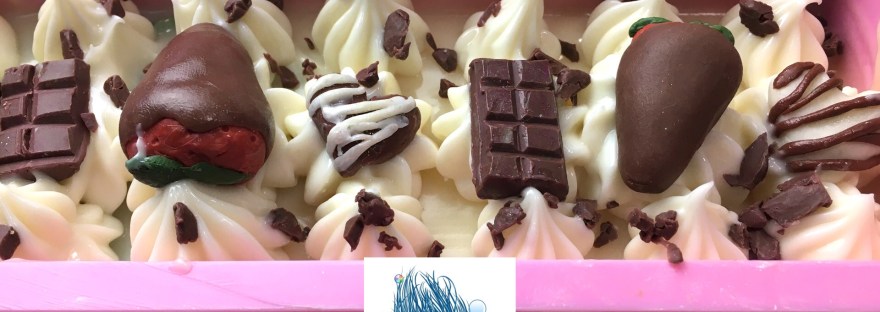

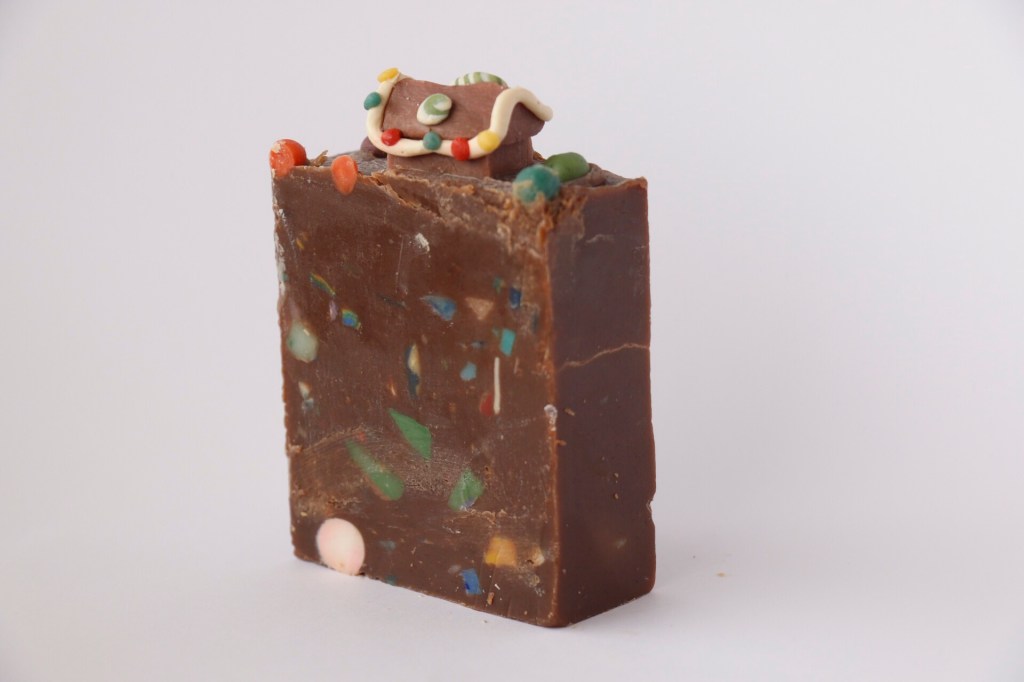


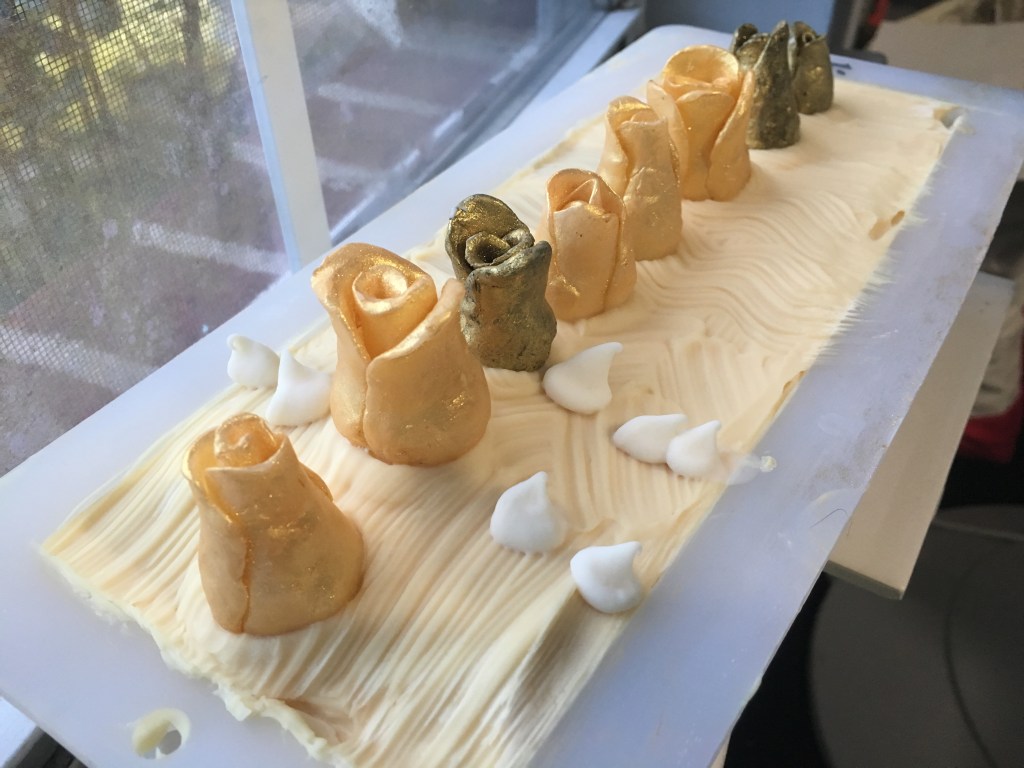
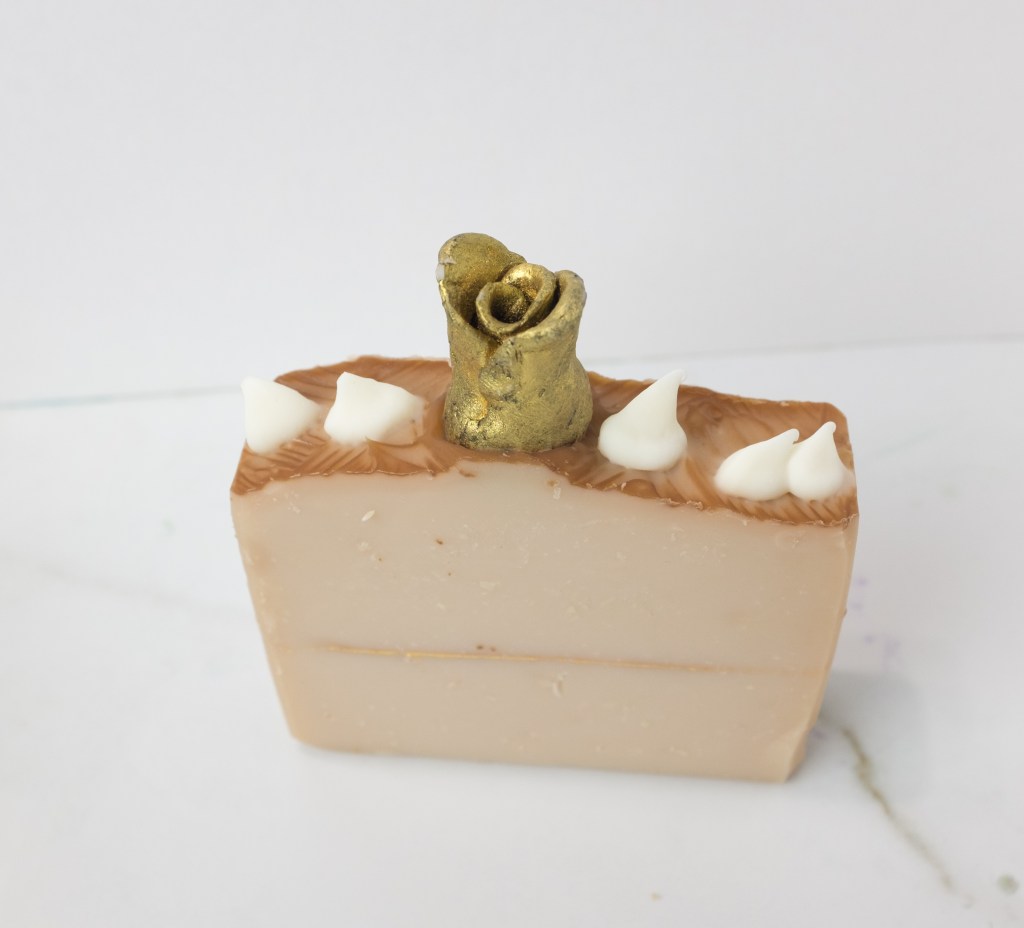

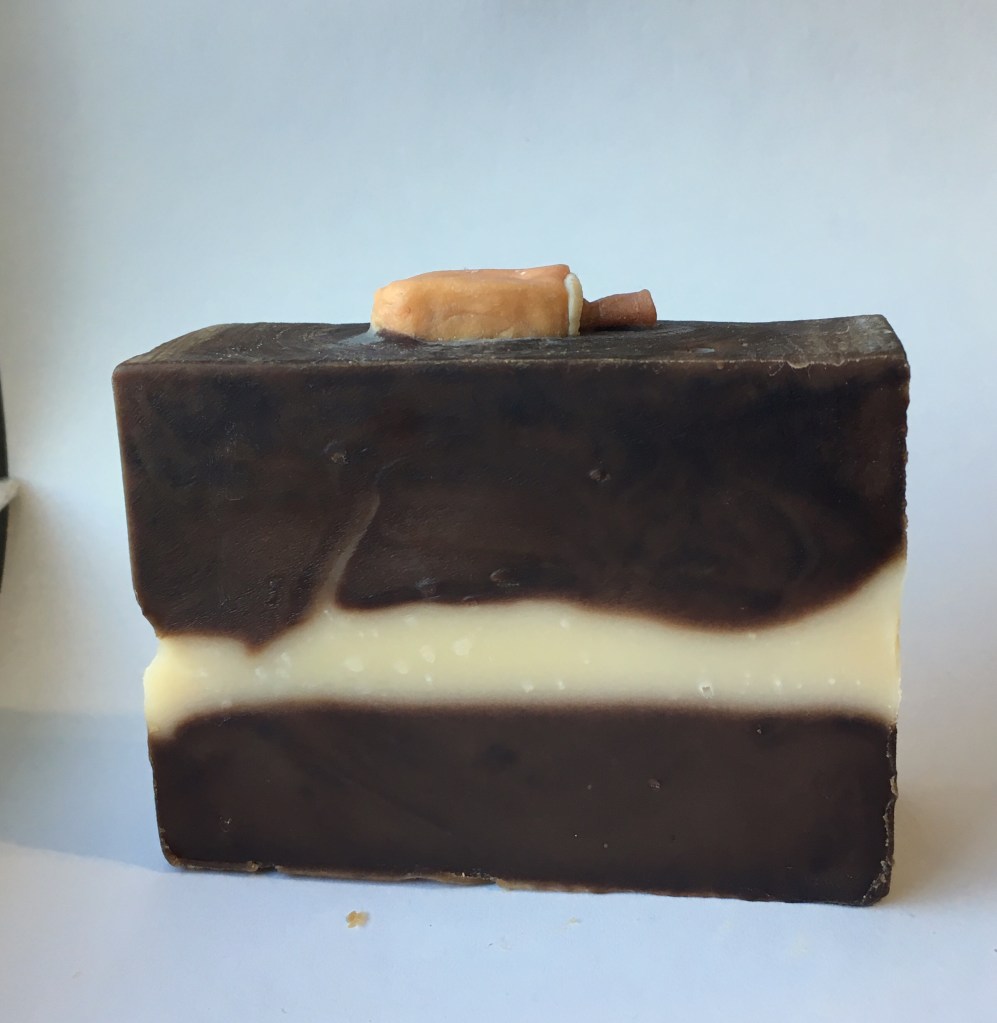
A discoloring soap fragrance is one that will cause the soap to darken or discolor. Commonly this is due to the vanilla (or vanillin, or ethyl vanillin) in it. Sometimes though, the discoloration is more yellow than brown, and this is commonly observed in fragrances or essential oils with citric elements. Like orange 10x essential oil.
All the soaps above had fragrances that contain vanillin, I did not add any colorant to it, except to the portion that is either blue or yellow. This is what I have learned about working with these fragrances:
- The brown discoloration will bleed into parts of the soap that do not have the fragrance. As seen in the creamsickle soap above. The band in the middle did not have fragrance, and I had added a small amount of orange mica (which was too little and was not noticeable). Over time, the middle band had turned a lighter brown just from being surrounded by the brown color on top and bottom. The vanilling content for this fragrance (Creamsickle) was 6.15% of vanillin + 6.15% of ethyl vanillin, hence the super dark color.
- The depth of the discoloration is affected by the color of your oils. As seen in the gingerbread houses soaps. The first one (the large ginger bread house) and the second one (smaller gingerbread house on top) were both fragranced with Hansel and Gretel’s House. The main difference is that the smaller gingerbread house soap, also included goat milk, the goat milk had turned the soap batter to a medium yellow color before pouring, so the fragrance turned it a darker brown. The big gingerbread house did not have any milks, and the recipe oil colors were light (beef tallow looks like vanilla ice cream, the shea butter is refined so it looks white, the coconut oil is creamy white, and then the olive oil is a light yellow, while the castor oil is a medium yellow). By the way, the vanillin content of this fragrance is 4% plus ethyl vanillin 3.2% for a total of 7.2%.
- The discoloration tends to concentrate on the top. For some reason, I have noticed that the discoloration is the darkest on the top of the soap during the first few days. Something like a brown powder seems to sit on top. This could be because the “discoloration” is a reaction to oxygen exposure (oxidation) If you cut a soap that is discolored in the center, it will have a lighter color inside since that part has not been exposed to the air. This can be seen in the golden rose soap above. Interestingly enough, this fragrance had 9% of vanillin content, it should have gotten darker than it did. I am not sure why it did not. The fragrance was Relaxing from Brambleberry.
- You can use a different fragrance and color on a large portion of your soap. There will be bleeding, but the bleeding should limit itself to the border areas, this works if your fragrance vanillin content is small (less than 5% I would say). This can be seen in the sea shell soap. The fragrance was Coconut Shavings from Bulk Apothecary, I cannot tell the vanillin content from their website, but based on my experience, it seems to be 3% or less.
- you can make your own vanilla stabilizer. Though stabilizers are not permanent, they can help ward off the discoloration for a few months perhaps. I learned about the diy stabilizer here: https://www.ultimatehpsoap.com/post/thetruthaboutvanillinandvanillastabilizers
- If you decide to try the above, you can find the ingredient here. (aff link)
- UPDATE: There is an additional ingredient for the DIY vanilla stabilizer, that makes it work better. It is sodium metabisulfate and for usage rates, please visit this forum post.
- Update 2: I tested another DIY stabilizer that has kept oxidation at bay for over a year. You can read about it here.
Chocolate Mint Soap
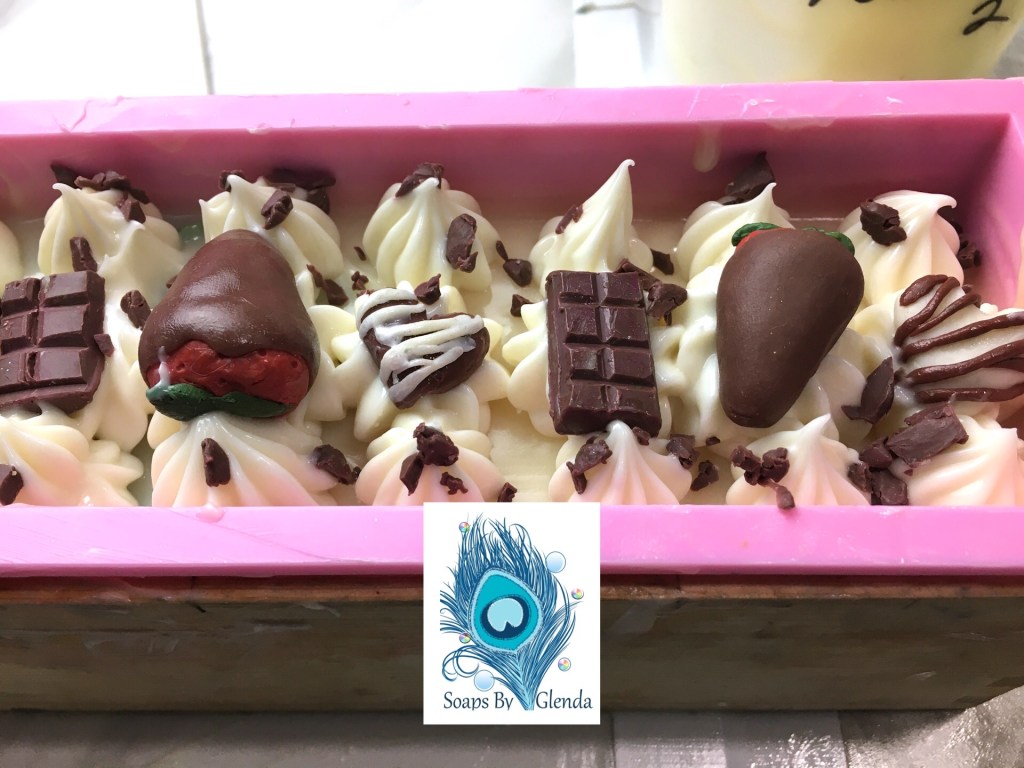
This week soap has a dark discoloring fragrance, so I decided to just let it be, it went with the theme of the soap since it is a Chocolate Mint soap. I left the top without fragrance and colored it white instead. Part of the brown is migrating, but it will not turn it to a complete brown color, just mainly some browning along the edges of the white.
The Recipe
Here is a link to the lye calculator recipe site, where you could copy and adjust recipe to another size.
| Liquid Required | 8.19 oz | 232.32 g |
| NaOH Weight | 4.22 oz | 119.68 g |
| Oil Weight | 30 oz | 850.49 g |
| Fragrance Oil Weight | 1.88 oz | 53.16 g |
| Superfat | 5% | |
| Total Batch Weight | 44.29 oz | 1255.64 g |
| Lye Concentration | 34% |
Recipe Oils, Fats and Waxes
| Oil | % | Ounces | Grams |
|---|---|---|---|
| Tallow Beef | 30 | 9 | 255.15 |
| Coconut Oil, 76 deg | 25 | 7.5 | 212.62 |
| Olive Oil | 21 | 6.3 | 178.6 |
| Canola Oil | 9 | 2.7 | 76.54 |
| Castor Oil | 8 | 2.4 | 68.04 |
| Shea Butter | 7 | 2.1 | 59.53 |
| Total | 100 | 30 | 850.49 |
EMBEDS:
These are the tools I used to make the embeds:
- Chisel (though a kit from Hobby Lobby might be more convenient depending on your location, aff link)
- Heart shape Resin mold: However, this silicone mold might be easier to use: (aff link)
TOOLS and supplies.
- Square silicone mold (Aff link)
- Titanium dioxide, dispersed prior in oil (about teaspoon dispersed in tablespoon of light olive oil, I use a silicone icing spatula to try to break down lumps, aff link)
- Chocolate Mint fragrance from Nurture Soap. It is discontinued now, however, it is a popular fragrance found in most soap making suppliers websites.
and here is a video of the making:


 Soaps by Glenda
1 thought on “Working with a discoloring soap fragrance”