

The Story of my Lavender Mud Soap
(Sigh) It happened. Again. The last time I was afraid of having a lye heavy soap, a fragrance was the culprit (though I was to blame too) I have since learned to be careful with floral fragrances and acceleration.
This time is on me! I decided to experiment with citric acid in soap. The lye calculator website I usually use, lists suggested amounts for it. I wondered why and it explained it could reduce sticky soap scum or residue, in hard water areas. So I decided to try it, since I happened to have some citric acid on hand. (Which I bought just because it was on sale! Really. I have never made a bath bomb, but maybe I was thinking I would. I have since learned it is best if citric acid is used within 6 months for the most effervescent experience. Which probably explains the sale price, and which means I need to use this up somehow). The citric acid was not the problem. The problem was that I forgot to add it!
Ordinarily, forgetting an ingredient that is an additive (not an oil), like a mica, sodium lactate, or fragrance, would not be a problem for me. Life goes on, there is always a future batch I can add that to. But in the case of citric acid, forgetting to add it meant that my soap was probably lye heavy. Why? Because citric acid neutralizes lye, to an extend, so to make up for it I needed to add extra lye (a specific amount of lye). Otherwise I could have a very greasy bar. I had already added that extra lye, so I needed the citric acid to keep it all balanced.
What made this worse was that I realized my mistake after I had poured most of of my soap batter into the mold. Had I done a single color batch, I would not have cared. I would just put everything back in the container and add the citric acid. But no. This is the irony: My first batch using citric acid was earlier the same day, with an uncolored batch! A batch that I only added kaolin clay to! That, would have been the perfect ideal situation in which to fix this problem. But it was not to be. I messed up with a rainbow soap batch, that had about six colors in it, layered in a specific way. Where is that crying emoji when you need it?
😭 here! 😭😥😓
So, seeing that I need to act quickly, I poured it all back into the bucket, 5 lb worth of soap batter, and added the citric acid mix (mixed with water) to it, and for good measure I added what I felt was a lot of extra oil. Throwing caution to the wind I just poured it straight from the bottle, unmeasured. Note to self: Don’t do that! Measure first so later you can run then numbers in the calculator.
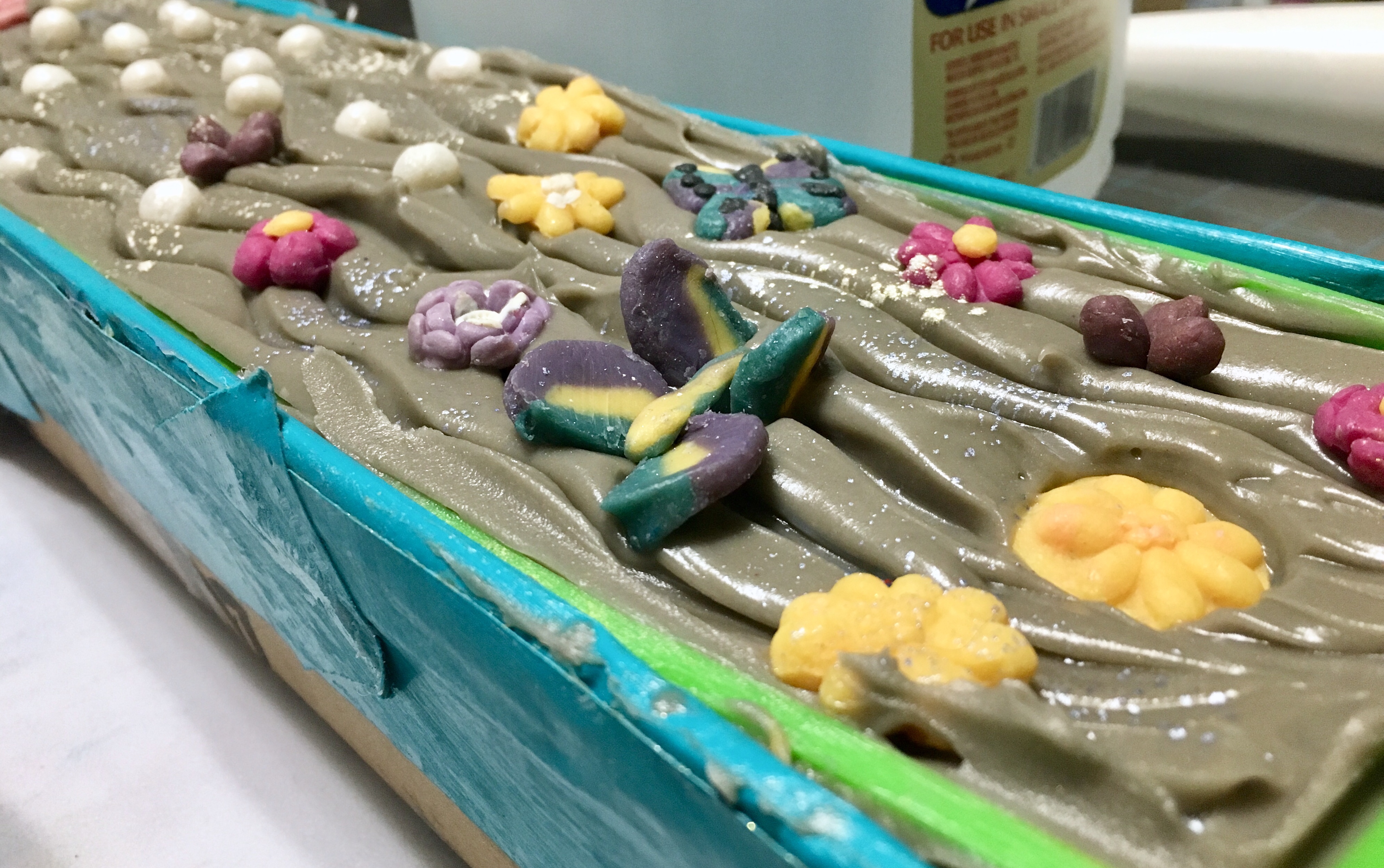
And I stirred and stirred, smashing all the soap lumps I saw. I went through three pairs of gloves since in the process I seemed to have gotten some soap mix on my arms, I was wearing long sleeves but I guess in the rush it got through that too. No burns, just itchiness that I had to go wash every time. All the stirring caused what I knew would happen: Mud colored soap. However, to my surprise, it looked like a grayish brown mud. Maybe because I had activated charcoal in it and lots of blue? So I pulled soap dough embeds I was saving for a future project from their resting boxes, and told them: “This is your time to shine! You will be the only interesting thing in this soap! Rescue this mess!”
And they did! At least I think so.
If you think this is the end of the story, there is more. As I was wiping the buckets, I realized another blunder: I had not dissolved all of the citric acid into the water. I was having trouble getting it to dissolve earlier, so I told myself I would use the mini blender later to blend the portion that settled at the bottom. Which of course I did not. And that was when the real worry came. Is my soap lye heavy? Because I did not add all of the neutralizer/citric acid mix, and by then it was setting up, I seriously doubted I could mix it again, and it was almost midnight.
Thank God, it was not lye heavy, but it did send me in a frantic google search that resulted in this post!
Is my Soap Lye Heavy?
By now you probably know that lye (sodium hydroxide) converts oils into soap, through a process called saponification. And you probably also know that there are specific amounts needed of each for this to happen. Because each soap has a different SAPonification value, different amounts of lye are needed for each oil.
Superfatting sounds like something I like to do to myself when I keep eating after I feel full. But in the soap world, many will know it is when you either add more oils or less lye than it is required. Let’s say, hypothetically, that you need 3 oz of lye to convert 16 oz of manacao oil (totally made up oil) into soap. If you only use 2.5 oz of lye instead of 3, that means that a percentage of the manaco oil will not become soap, but will remain an oil. And this is desirable as that extra oil will cause the soap to become more gentle on your skin, by reducing its cleansing ability slightly. But if you use 4 oz of lye instead of 3, that means all 16 oz of manacao oil will become soap, and not only that, there will be extra lye floating around. That extra lye will be looking for more oil to convert to soap, that oil could be the natural skin oils, which means this soap can burn or irritate the skin.
I explain all that because for this batch superfatting came to the rescue.
I had a 5% superfat. So I knew I had some wiggle room in case I had put too much lye; however, I have used the Sage Lye calculator before, and that one warns not to go under the 5% superfat unless you know the actual oil SAP value, since most calculators have an approximate value only.
I was experimenting with adding citric acid to my recipe, as a chelator. Chelators help reduce soap scum in hard water areas, and also prevent DOS (Dreaded Orange Spots) which are caused by oil rancidity, humidity, and more commonly by free floating metal ions. You can read more about that here or here.
I added 1 oz of citric acid (mixed with water), and an extra 0.88 oz of lye, since citric acid neutralizes some of the lye.
After pouring the soap, I realized that not all of my citric acid made it into the soap. So the extra lye I had added to compensate for the citric acid, could cause a lye heavy soap. I freaked out so I removed the soap batter from the mold, and added more oil to compensate, which ruined my original design; but avoided lye heavy soap (or so I thought, but did not actually measured how much more oil I added, which would have been ideal). I would say that about 3/4 of the citric acid actually made it into the soap, (the rest remained at the bottom of the measuring container, it had sedimented there and I did not stir it before adding to the soap)
The citric acid that actually made it into the soap should have neutralized the extra lye. But to be sure, after I made the soap, I went back to my recipe and changed the superfat to 0%, and also guess estimated how much extra oil I added when mixing (by watching the video of the making, thankfully I had recorded the making, but weighing it would have been better). It would have also helped, I know now, to have weighed the mold with the soap on it. Which means knowing the weight of my molds and containers would be handy. As advised here . I had also used extra oil to mix the micas, and I had about four micas, so that should have helped some. At that point, I felt 98% sure that the soap would be ok. (It would be a very cleansing soap without superfat, but still a safe soap) But to be 100% sure, I did the below:
Figuring out if soap is lye heavy
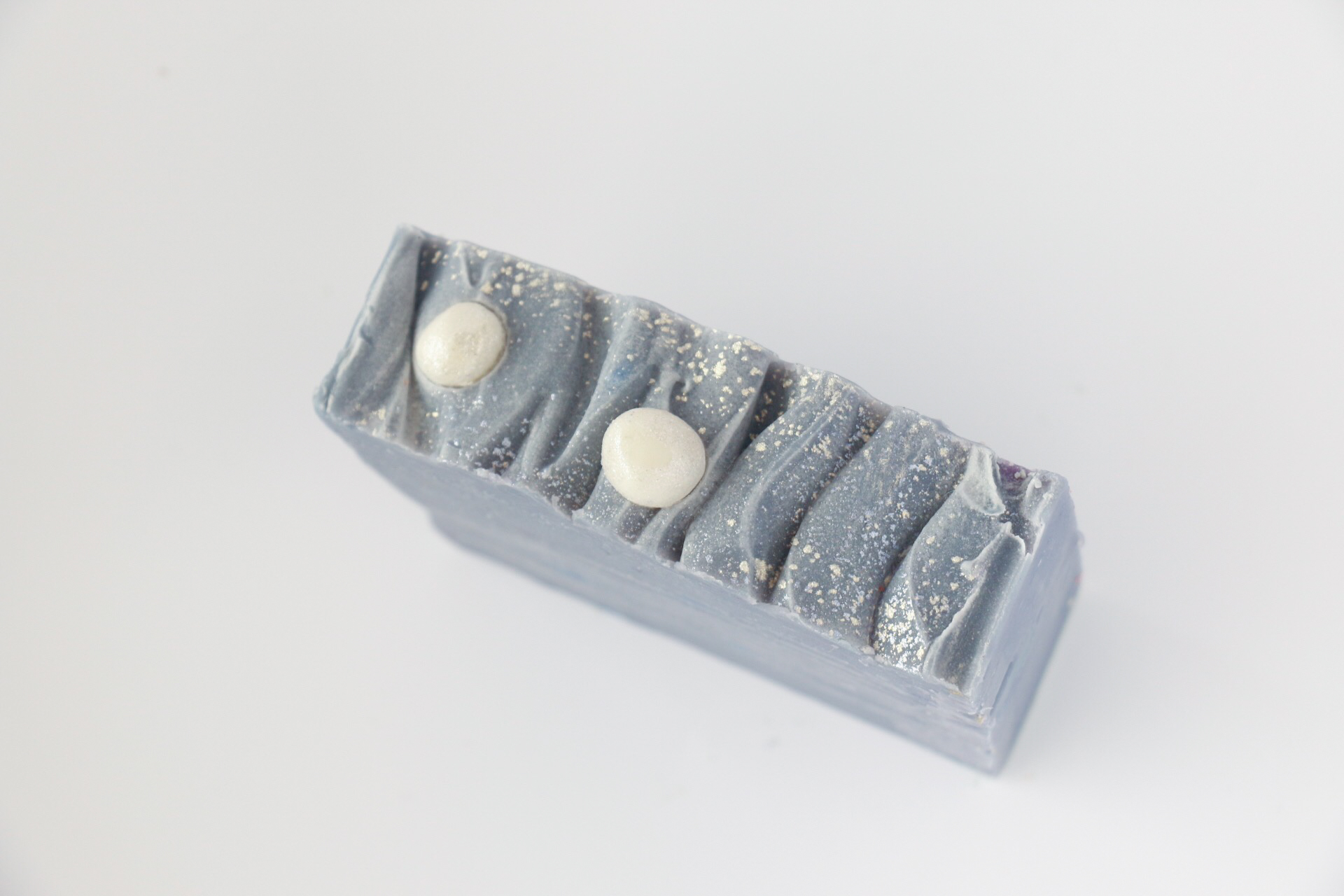
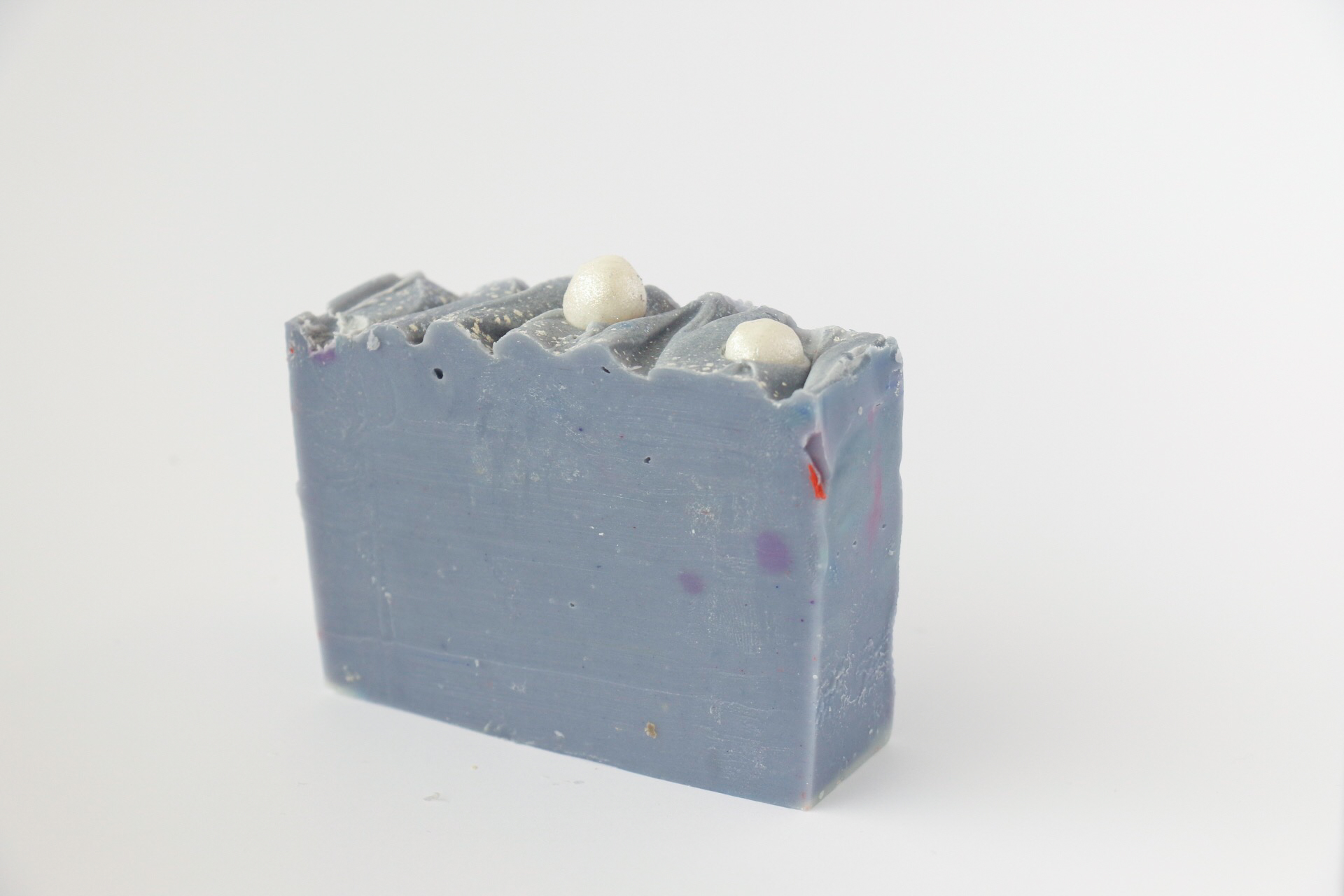
- After I cut the soap. I will look for liquid pockets or crystals. Kenna from ModernSoapmaking states that it is easier to identify lye heavy soap by visual clues. I found her blogpost about Ph testing incredibly helpful. I Googled images of lye heavy soap to compare.
Update: There are no visual signs of excess of lye
2. After three days, I will test the Ph with the red cabbage method. Since the soap is dark colored, I am not sure if this will help. But I may also try another method, such as with Phenolphthalein or ph measuring strips* (aff link), though I know that is not 100% reliable method.
Update: I did it, and the liquid turned blue! so that is a plus.
3. After a week, I will try the soap myself. My skin is fairly sensitive. I will for sure know if the soap is lye heavy and will wash right away of so. So far, is safe to touch out of the mold.
Update: I washed my hands with it and did not feel or see any irritation or experienced any negative or unusual sensations.
WHAT TO DO IF YOU SUSPECT YOU HAVE LYE HEAVY SOAP
Chances are that if you are reading this, you might be in a similar situation to mine. Perhaps you forgot to add an oil, or you used the wrong lye solution. (I have done that, I mixed my lye ahead of time for different soaps, and I grabbed the wrong one the other day). Your course of action depends on when you realize you made the mistake. In my case, I realized it right after pouring, when wiping out my containers. So I just poured the soap from the mold back into the container and added more oil. Here is my advice depending when you realize you might have lye heavy soap:
A) 1 or 2 hours after making the soap: If you forgot to add an oil, and you know which oil it was, enter your recipe in a lye calculator, without the oil you forgot. See how much lye is needed. Compare that to the amount of lye you used. Change the superfat and decrease it all the way to 0% if needed. Compare the amount of lye needed for that to the amount of lye you used. If it is the same, or you used less lye than that, you should be ok. Your soap will be cleansing but should not cause irritation or burns.
If you still used more lye than what was actually needed, you will need to add the extra oil you forgot. You can do as me and poured everything back and mixed the extra oil. (If the soap is still fluid enough, otherwise you might have to hot process it)
B) Within 24 hours of making the soap: If the soap batter is too solid to be mixed with oil, you will need to rebatch it. That is, put it in a slow cooker (a soap dedicated slow cooker), add the extra oil, and cook it until it reaches a ph of 9-10. Then pour it (or plop it) into the mold, be careful as it will be hot. To test the ph, have a small cup with some distilled water in it. Take a small piece of the soap and try to dissolve it or stir it slightly into the water. Then dip one of the ph measuring strips* (aff link) into it, take it out right away and look at the colors to figure out the ph.
If my soap had been lye heavy, these are the options I would have had:
- Look into rebatching it. Though it may be too late. (Update: rebatching needs to happen within the 24 hours following the making of the soap, on the stove or slow cooker, by adding the required amount of extra oils needed.)
- Leave it alone and test it every couple weeks or every month. The lye is supposed to react with air and become soda ash. My concern with this approach is that not all the soap is exposed to air, so I would probably chop it and let it air for several weeks, then use as confetti.
- I could cut it into cubes and put into organza bags or bowls, and use as room or drawers deodorizers.
- I can turn it into a cleaning powder for use in the kitchen as a pan degreaser (Using this recipe)
Video:
If you want to watch the making of this soap, go here:

 Soaps by Glenda