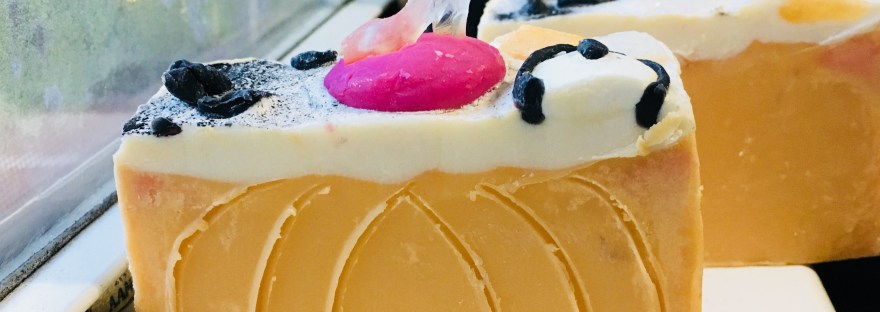
 It is one of the most well known stories of all time: The Cinderella Story. Most of us are familiar with the Disney version of it. However, the story is much older than Disney. The first recognized version comes from Egypt around 7 BC, the oldest European version is from 1634. You can read more here.
For the soap, I went with the most popular version that is in the public domain, the one by Charles Perrault, which you can read here. Since I might sell some of these soaps, I wanted to avoid copyright infringement, so I avoided the light blue color of the dress in the movie, and instead chose gold and silver, as in the story “her clothes turned into cloth of gold and silver, all beset with jewels”.
If you are interested in Disney licensing, they have a FAQ site.
And the last paragraph in this website explains the Public Domain issues well.
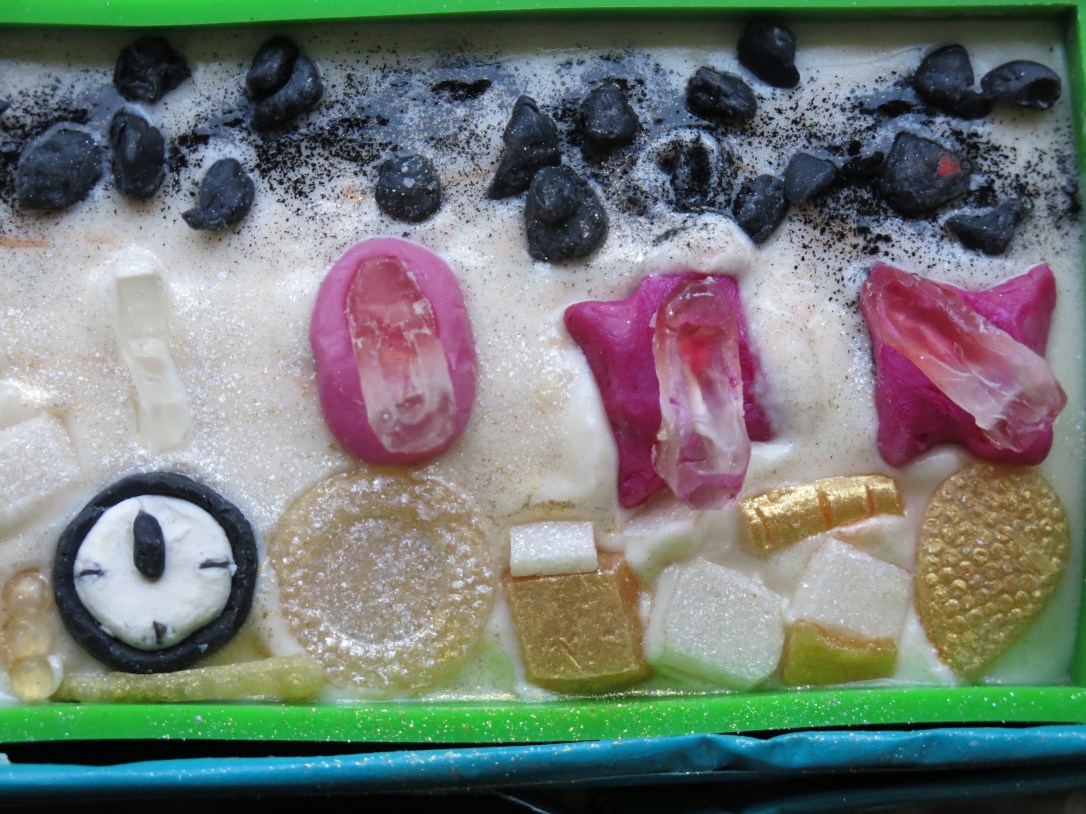
The sketch:
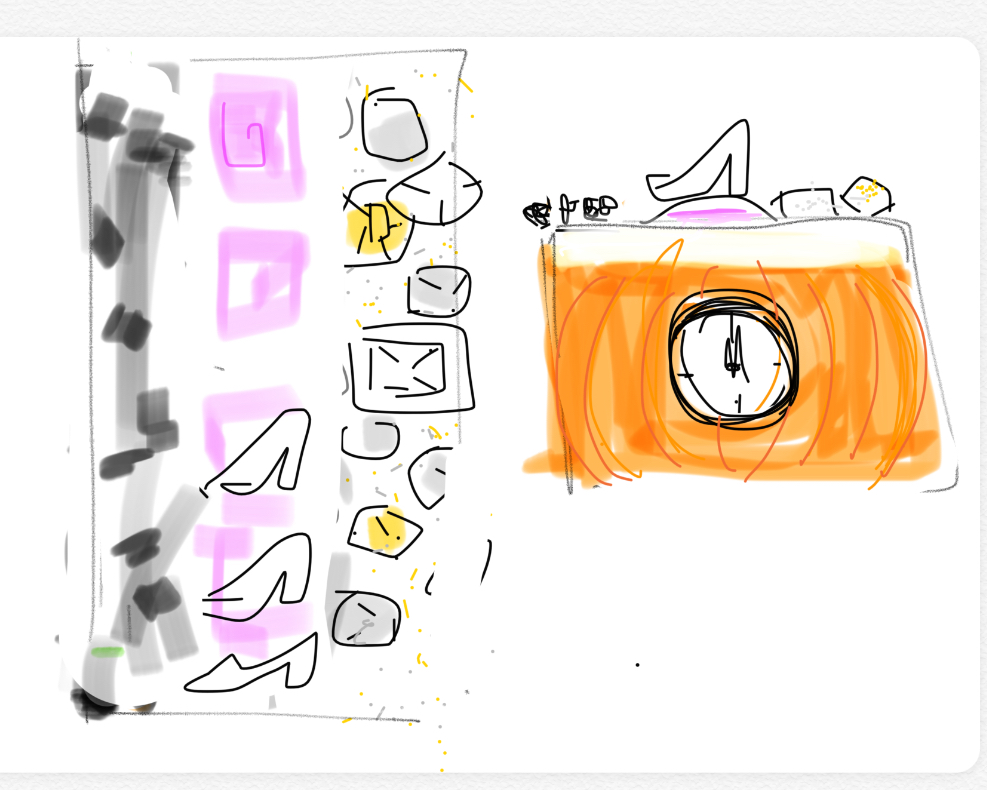
I made the “jewels” with clear melt and pour soap, and I used this Wilton Jewelry silicone mold, with silver and gold mica, as well as Super Sparkles Enviroglitter from Nurture Soap. And the glass slipper is plain crystal base m&p cut to shape. (Though there are molds out there that could give you a more uniform look).
I have been using a recipe that is 80% solid fats/butters, this caused some crumbling when cutting. I will list instead a different recipe that should be easier to source too, or you can use your own.
I have included a link to the video at the end of the post.
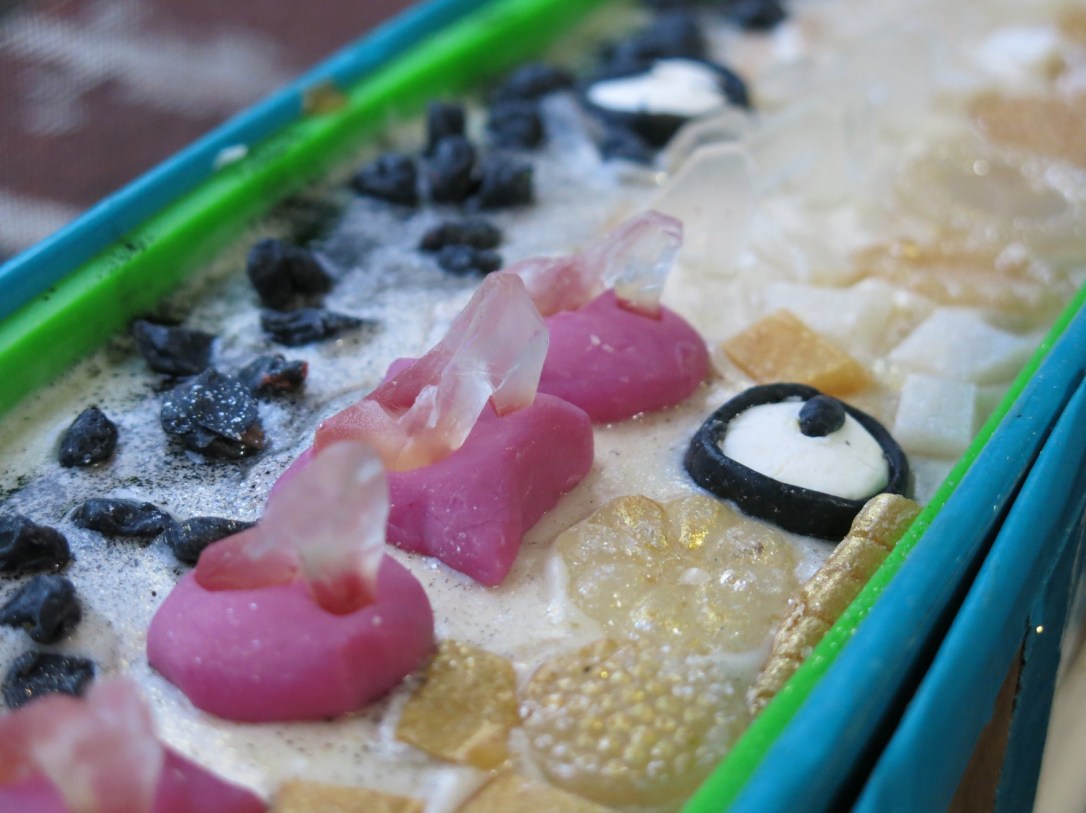
Cinderella Soap
(Feel free to adjust the amounts by plugging it into a lye calculator. I use lyecalc.com) This is enough for my 5 lb mold (which holds 6 lbs of uncured soap)
| Ingredient | Gram(s) | Ounce(s) | Pounds(s) | Oil % |
| Karite Butter (Shea) | 187.56 | 6.62 | 0.41 | 10% |
| Tallow, Beef | 656.46 | 23.16 | 1.45 | 35% |
| Rice Bran Oil | 468.90 | 16.54 | 1.03 | 25% |
| Ricinus Oil (Castor Oil) | 93.78 | 3.31 | 0.21 | 5% |
| Coconut Oil, 76 deg | 468.90 | 16.54 | 1.03 | 25% |
| Ingredient | Gram(s) | Ounce(s) | Pounds(s) | |
| Lye – NaOH 100.000% Purity (5.000% Superfat) | 260.59 | 9.19 | 0.57 | |
| Water (33.000% Lye + 67% Water Solution) | 529.08 | 18.66 | 1.17 | |
| Total Oils | 1,875.60 | 66.16 | 4.14 | |
| Soap Weight (Pre-Cook) | 2,693.12 | 95 | 5.94 |
Colorants & Additives
Bear in mind the amount needed will vary if you are making less or more soap than above. They are guidelines, feel free to play with the colorant amounts.
2 – 3 teaspoons of orange mica (I used Orange Vibrance mica from Nurture Soap). I only used 1 teaspoon and found it lacking, as I wanted a deep orange and got a yellow peach color. The fragrance oil discolors to yellow/tan. Dispersed in 1 tablespoon of oil
1/2 teaspoon of yellow oxide (optional, for a warmer/darker color)
1/4 teaspoon of Titanium dioxide dispersed in 1 tablespoon of water.
4 teaspoons of sodium lactate (optional, I did not use and my soap was very soft when unmolding)
1 teaspoon of silver mica or glitter for embeds, and about 1/8 teaspoon for sprinkling on top (I used super sparkles enviro -glitter from Nurture Soap)
1 teaspoon of gold mica for the embeds and about 1/8 teaspoon for the top. (I used gold sparkle from Brambleberry)
1/8 tsp of activated charcoal for the top.
Fragrance
0.95 oz of Cherry Almond Fragrance Oil from Bramble Berry. (Optional) Usage rate is 1% of soap batter.
Feel free to use another fragrance, just check the usage rate and discoloration properties. The Cherry Almond is very strong so it has a very low usage rate.
Embeds:
- If you have a pump/shoe mold, feel free to make your glass slipper with it and clear melt and pour. Or try cutting it like I did (video link below).
- The “pillow” for the glass slipper is made out of soap dough, you can try your hand at soap dough by keeping a little bit of any mix covered with clear plastic wrap.
- If you have jewel shape molds, mix clear m&p with the gold or silver micas and pour. Alternatively you could just pour on a loaf mold, about 1/4″ thick and remove it and cut shapes out of it once hardened.
- For the coal, you can either color clear m&p with activated charcoal, pour on any mold, and chop pieces out of it. Or shape them with black soap dough.
Equipment:
- Plastic #5 or #6 containers for the lye, water, oils
- Stainless steel spoon (small and large)
- Silicone spatula
- Hand blender
- Thermometer
- Scale
- Brush (about a half inch round will do, a natural fiber or cheap make up brush will do)
- Silicone liner for mold (or line with freezer paper)
- 5 lb loaf mold (or adjust recipe to your mold by plugging into lye calculator)
- Individual cavity molds (to pour leftover soap) I like having leftovers
- Safety Gear (nitrile gloves, face mask or properly sealed goggles, closed shoes). Long sleeves and pants recommended too
PROCESS:
- In a well ventilated area, add gradually the lye to the distilled water and stir periodically until dissolved. Do not breathe fumes. You can freeze your water ahead to avoid fumes. You need to wear your safety gear. You can prepare this several hours ahead, keep it properly covered. Add the sodium lactate after it is mixed if using. You can wait until it comes to room temperature, or to 120 °F (48.88 °C) at least.
- While you wait for lye to cool down, mix the orange mica and yellow oxide (if using) with 1-2 tablespoons of oil. This is not part of the recipe oils, it could be olive oil, almond oil, grapeseed oil, etc. I like to mix mine with a <a href=”http://Norpro Cordless Mini Mixer, 5 Piece Set
” target=”_blank” rel=”noopener”>mini blender. Also, add the fragrance oil to this mix.
- Mix your titanium dioxide with 1 tablespoon of water.
- Weigh your oils and heat them up until they are clear (I put mine in the microwave for a couple minutes).
- Add your lye solution to the oils slowly, to avoid splatters pour it on the blender shaft.
- Stir with the blender on Off position initially, then blend for 15 second periods, alternating with stirring, until you can no longer see the oils but it all looks blended (emulsified). This takes about 50 seconds to 1 minute with this recipe.
- Pour out into a small container about 1/8 of the mix (just enough to do one layer across your mold on the top) Add the titanium dioxide mixture to this and blend.
- Add the orange mica mixture (which includes the fragrance) to the rest. Mix briefly with the blender, or thoroughly with a whisk. I did not have any acceleration issues with the temperatures I had, though I was expecting to.
- Pour your entire orange mix in the mold, leaving just enough clearance on top for the white portion
- Slowly and gently (over a spatula if you prefer), pour the white portion on top. Depending how solid or liquid it is, you may wish to wait a couple of minutes.
- Dip your brush into the Activated charcoal and tap it gently along one side of the soap. It is ok if it spreads to the middle, any accidental sprinkles will be covered with the embeds.
- Gently spread the “coal” pieces on that same side.
- Do the same as above with the gold mica and silver glitter on the opposite side.
- If the soap is hardened enough that the rest of the “gem” embeds will not sink, add them to the opposite side, and then add the glass slippers in the middle.
- Voila! You can now let it rest and come back to check on it tomorrow.
- Wait 18-24 hours at least to unmold and cut, after cutting, you could carve pumpkin shapes with the tip of a skewer.
 ” target=”_blank” rel=”noopener”>mini blender. Also, add the fragrance oil to this mix.
Video link:
Video for Glass Slippers:

 Soaps by Glenda
2 thoughts on “Cinderella Soap”