

The Three Things to Consider when taking pictures
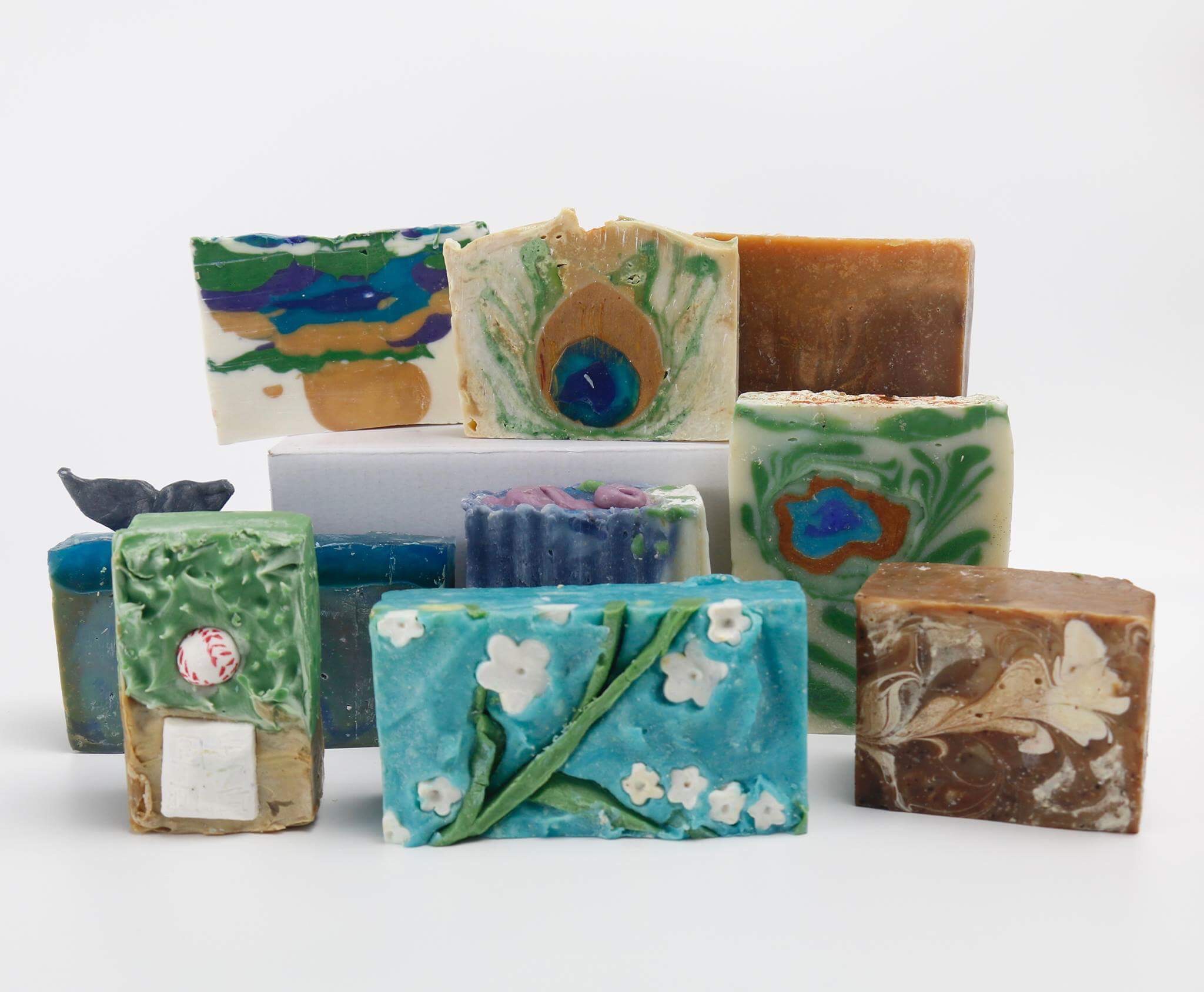 I have loved photography since I was a teenager, and it is currently a side job for me that allows me to fund my soap hobby. Questions about soap photography do come often in the different groups I belong to. And many a tutorial or blog has been written about it. So, I will not reinvent the wheel, just give you my take on it.
The most important thing, even more important than which camera you use, is the lighting. Be very mindful of the light. Even a good camera cannot compensate enough for a dark room, lit only with a warm yellow light bulb hanging from the ceiling while you are working on a corner.
Basically, you have to make three main decisions when it comes to taking pictures of your soap:
- Backdrop – which backdrop are you going to use? and, Will it have props?
- Lighting – Artificial or Natural? How will you diffuse it?
- Camera – Will you use your phone or another camera?
1. BACKDROP
What kind of backdrop do you need to use?
Well, there is no right answer for this. Your taste and purpose of the photo will dictate what you do. Some people prefer adding props and others prefer having the soap being the only subject. However, it may help you decide seeing how other stores do it (after all, big online stores probably know a thing or two).
How is most commercial product photography done? Indoors, with artificial lighting and a white backdrop (sometimes it is so white that it blends with the white of your computer screen). Take a look at amazon’s website. Items seem to just be floating on it. You can also check Macy’s or Nordstrom’s websites. Achieving that level of white requires usually post processing editing (usually done in Photoshop) and it usually requires separate lighting for both the background and the product. Sometimes a reflective white backdrop is used for this purpose. (Or frosted plexiglass, which is covered in this article)
Does this mean that you have to have a pure white background? No. Only if you want to. Though white is pretty neutral, and it will make your soap pop.
Personally, I use either white or gray backgrounds for my own pictures. Recently a client asked for white exclusively since her marketing consultant suggested this.
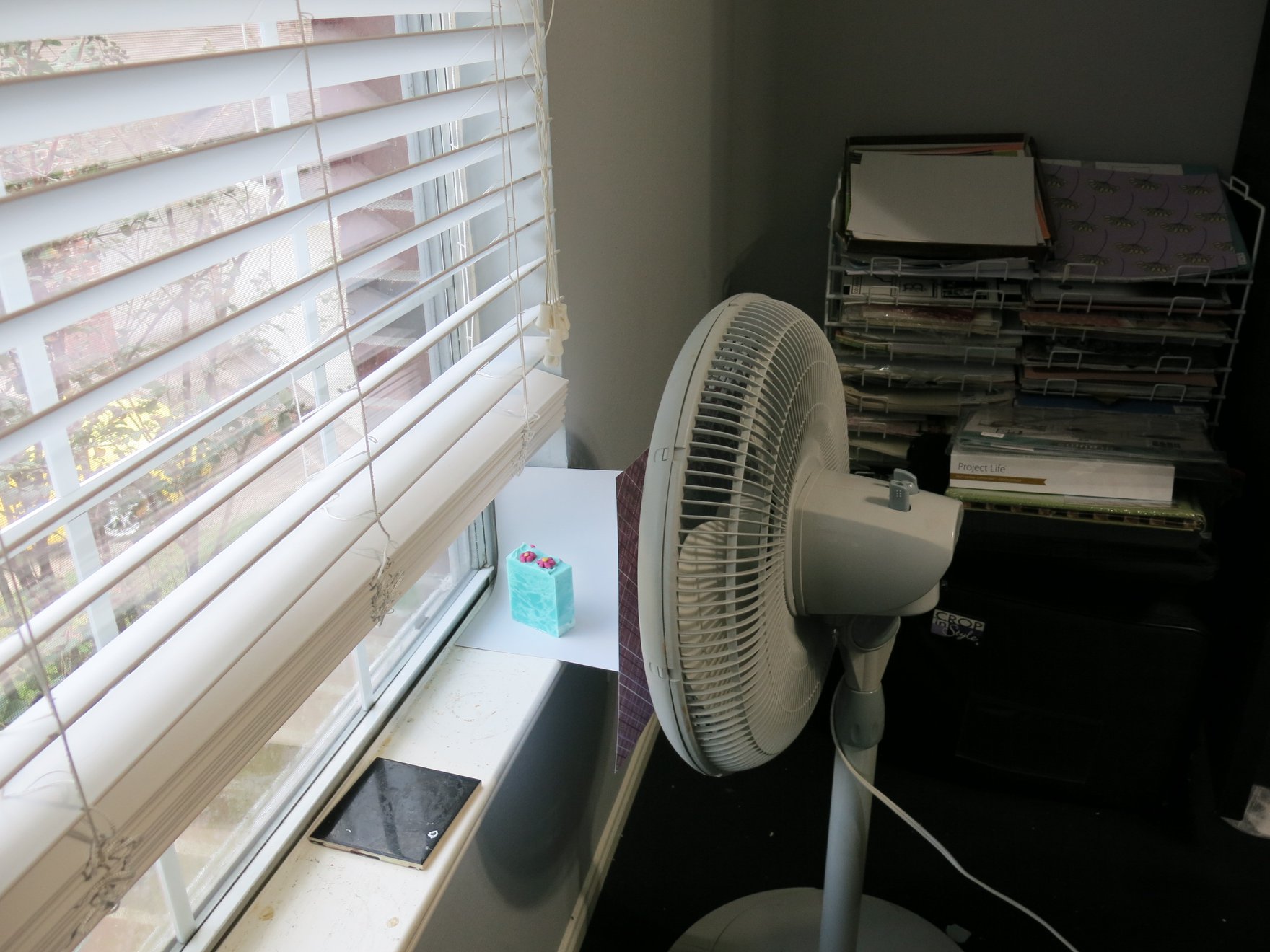
If I am doing a quick picture just for a soap video or to share on fb, I usually just put the soap on the window sill and grab a scrapbook paper (12×12) of a neutral color and take a picture with my phone.
It looks like this:
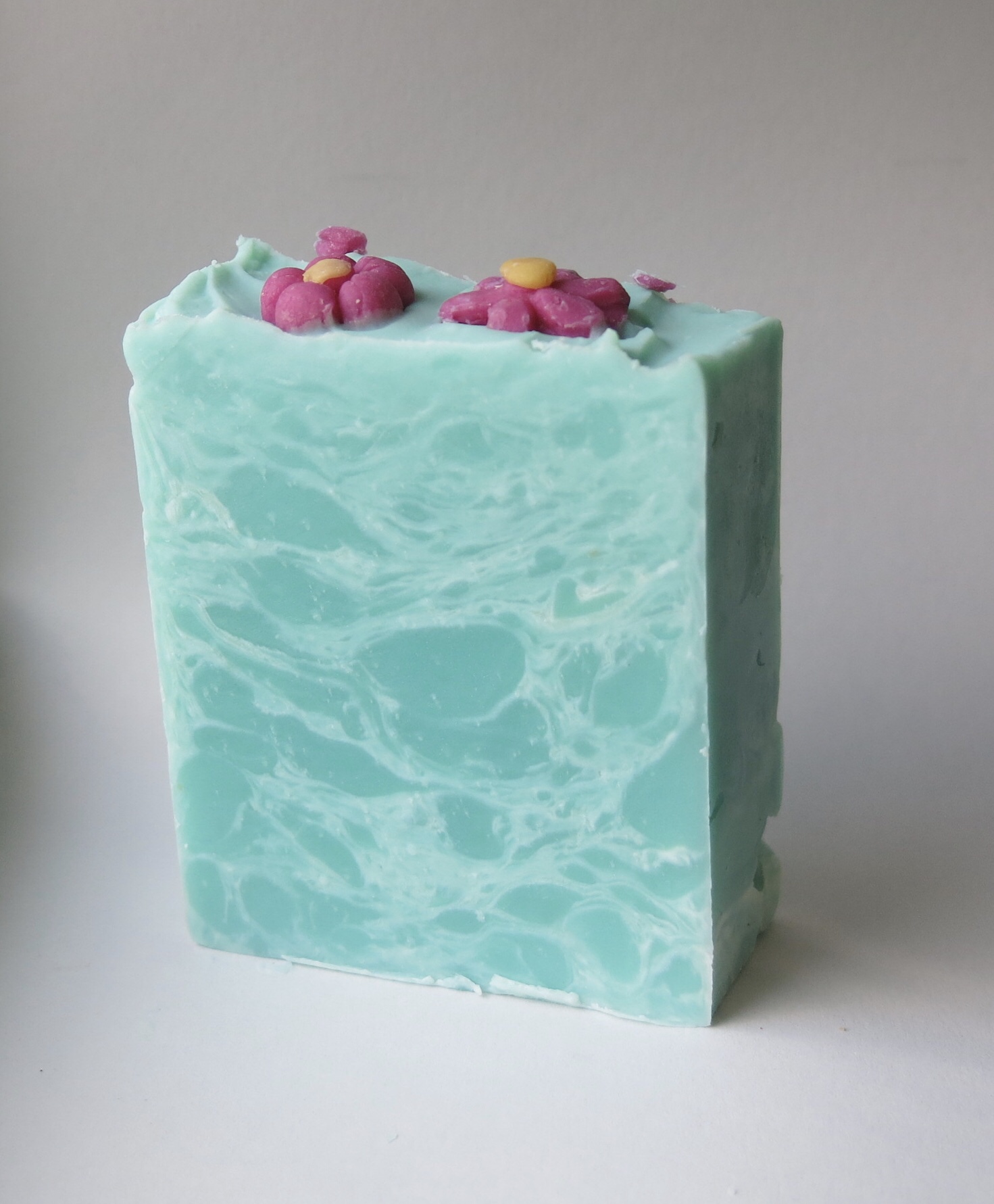
But if I am getting the good camera out, it will probably be a white background.
Speaking of background, what exactly do you use? Fabric? Paper? Well, for small items like soap, a piece of white cardstock (poster like) works beautifully, or you can go the frosted plexiglass route. (If you are not using a white box, it may need to be adhered to the wall somehow, or have a support). Recently I started using a large craft foam sheet, it turned out really nice too.
2. LIGHTING
Daylight:
I used to take pictures of my jewelry outdoors. But that only worked for one piece or two, and only a certain times of the day. And it varied if it was sunny or cloudy. However, in a pinch and for a few shots, you can take great pictures by putting your soaps by window light (See above my window sill shot). If you notice in that picture, the fan has a piece of paper taped to it, its purpose is to reflect light and fill in the shadow.
Artificial Light:
Though I love window light, since I cannot control the sun, I prefer to take pictures indoors now with controlled lighting. The least you need to know is that direct lighting is harsh and creates harsh shadows. And diffused lighting is your friend. This is what a light box does for you, the sides are the diffusers.
I used to have a lightbox, I built it following the instructions in this blog. I used my off camera flashes on each side for lighting, or two desk lamps, fitted with a strong day light color light bulb. After a couple of house moves I got rid of it, knowing I can build it anytime. However, I have not, since I have access to other lighting equipment more easily. Whether you build a lightbox or not, the next step is to decide what your lighting will be.
Here is another diy lightbox that includes a lighting attachment.
There are several lightboxes in the market that bring their own light though. But if you choose the DIY option, you can easily use a couple of desk lamps to light the soap. You would put them on each side of the light box. Just make sure to use bright enough lightbulbs, with true daylight color (it is on the blue scale). I have found the LED 100W daylight bulbs are very bright and should work, and they can be found at the grocery store. (Something like this.)
Or you can use one of these: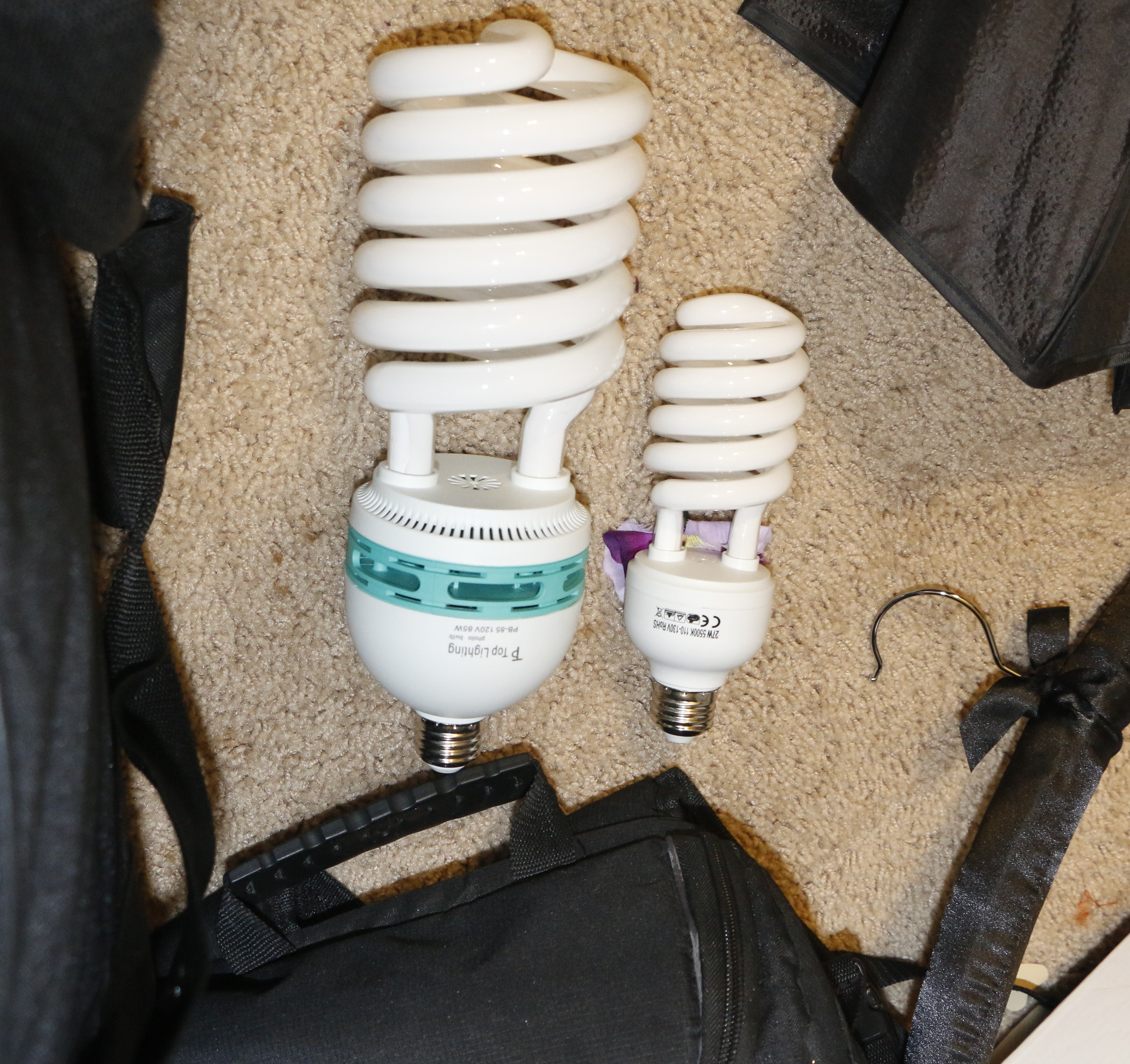 (The one on the right is a Westcott 50W/110V Daylight Fluorescent Lamp) and the one on the left is a generic version, 85W which you can find here. However, be mindful that some desk lamps have low wattage limits, if you get an LED bulb though, they usually have a lower wattage while being still strong.
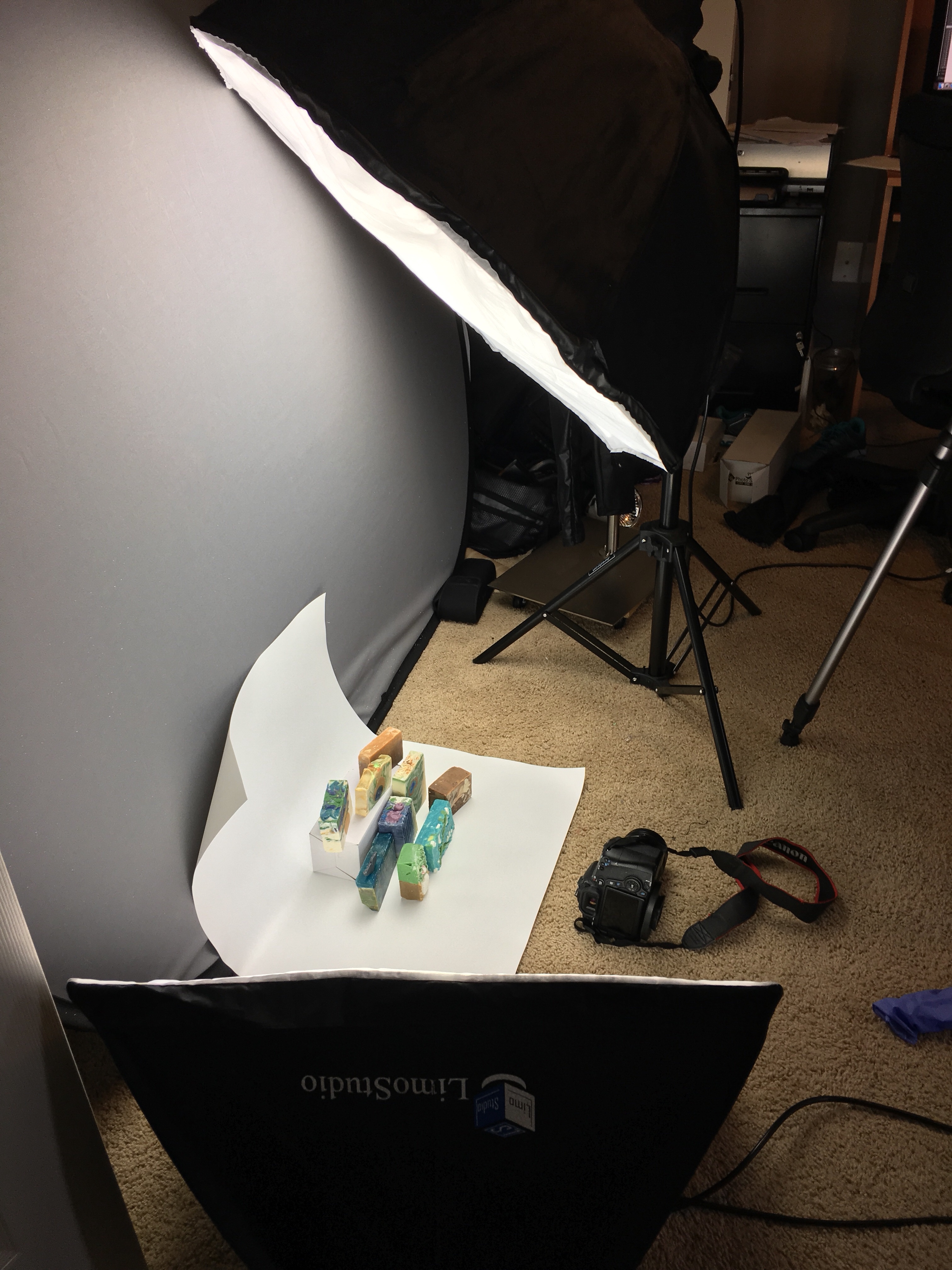
What lighting equipment do I have? Well, for indoor pictures I have one of these kits. (Bear in mind I take pictures of clothing mainly, so I need something big enough for a mannequin.) Sometimes I also use one of these cheaper but effective lighting sets as well. For my clothing pictures they come handy for filling out shadows.
In the picture below, The Westcott is on the right, the lumistudio on the floor)


3. CAMERA:
Before you start shopping for a new camera, let me tell you that some phones have great cameras nowadays. There is a Time magazine series of covers done only with an iphone and natural light.And one of my favorite photographers (I have learned a lot from his blog alone) did pictures of a saxophone with his iphone too. Article here. Personally, I am not crazy about the pictures my iphone takes, however, I have used it to take some of the pictures for this website . This means I need to edit the pictures from my phone a lot more.
My advice? Having bought and replaced several SLR cameras, I would suggest to buy used cameras, instead of brand new, to keep your spending down. Cameras are like computers, new ones are coming up all the time and they depreciate big time. But if you have a smart phone, give it a try first.
I cannot give advice as far as which specific camera to get because I do not know them all. I have a Canon 70D for my photography, which is an intermediate camera. The rebel series is the entry level and it is cheaper and they take great pictures. I had a Canon Rebel XS before this, and I sold it for $160 a few months ago. A couple months ago I bought a Fuji X100T, it was cheaper than their newest model. That is a mirrorless camera, which means it is lighter and smaller. Fuji cameras produce great color and crisp pictures of still objects too. I started with the Canon rebel series though, and did well with them for many years, but sometimes I prefer the Fuji’s because they are smaller, and mirrorless cameras are becoming more popular now too.
I recently took the below pictures with this light set and the Fuji XE2s camera body and the XF zoom 18-55 lens (which seems to have been replaced now by the XE3). This camera is pricey, but I bought it used in Ebay and got a good deal. I was pleasantly surprised how well the pictures turned out with some minor adjustments to the camera. However, there is a learning curve with this and most cameras if you are new to them, like I am to it.


Lastly, if all of this sounds too complicated or difficult, and you would prefer to spend your time making soap; consider hiring a photographer. If you have a consistent line of product that would only need to be photographed once (or only once or twice a year), it may be cheaper going this route than buying the equipment yourself and spending all that time learning to use it. Also, you may be able to get nice pictures at a decent price with a student of photography initially or someone who is starting out. You may be able to trade services for soap too!
Here is a video of taking pictures with available light:
And this one with electric lights:
Interested in knowing how much product photography costs? Contact me and I can give you an idea, it depends on the amount of product, background requirements, and whether actual prints are needed or only digital versions, among other things. You can see some of my work here.
There is a facebook group where you can also exchange product for pictures of the items you want.

 Soaps by Glenda